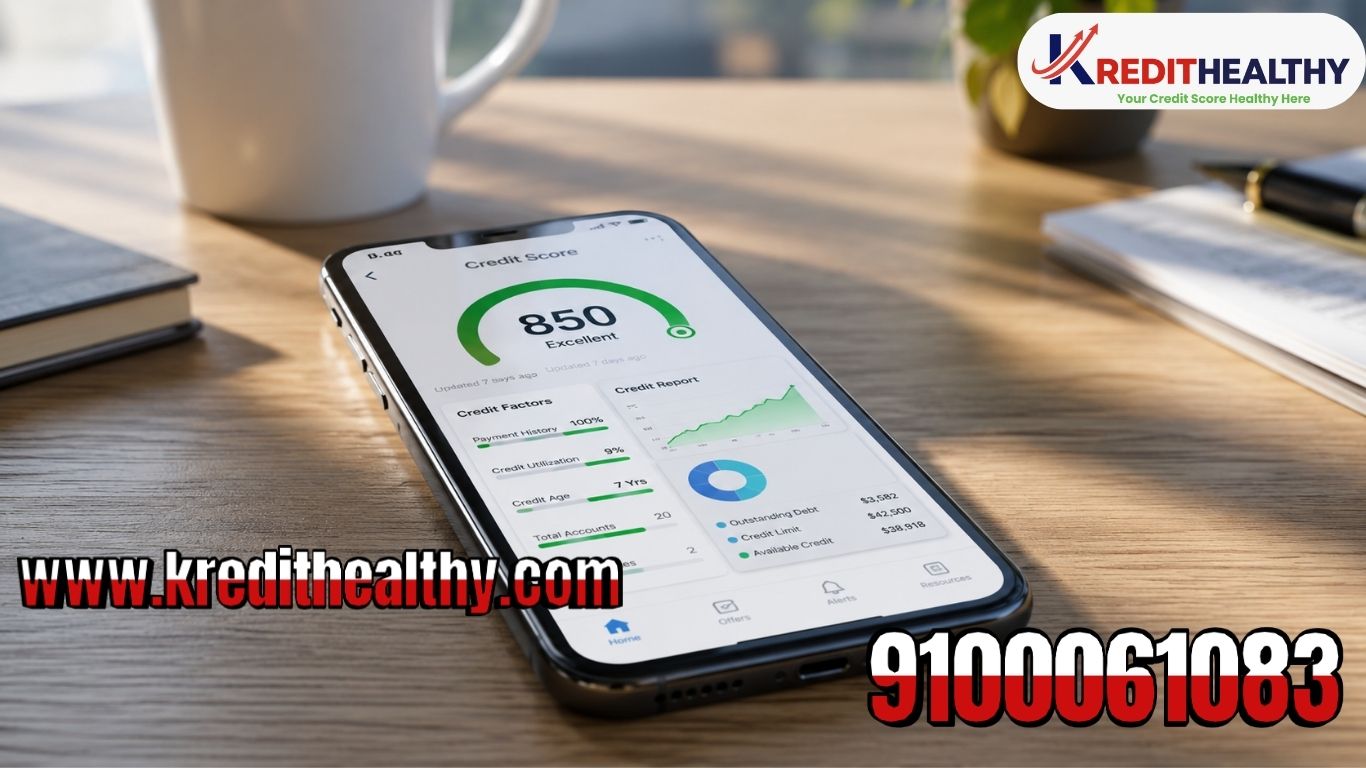

When managing your finances, your credit score acts as your financial report card. It is the first thing banks and financial institutions look at when you apply for a credit card, a home loan, or a personal loan. But have you ever wondered how high this number can actually go? What is the absolute peak of credit health?
If you are aiming for financial perfection, understanding the upper limit of your credit score—and how to get closer to it—is your first step. At KreditHealthy, we believe that tracking your credit health should be simple and stress-free. Let’s break down the mechanics of the maximum credit score in India and what it means for your wallet.
The Peak of Financial Health: What is the Highest Credit Score?
In India, the credit score range is strictly established between 300 and 900. This framework is utilized by the country's primary credit bureaus, including TransUnion CIBIL, CRIF High Mark, and Equifax.
The Absolute Floor (300): This is the lowest possible score, indicating severe defaults, multiple missed payments, or high financial risk.
The Absolute Ceiling (900): This is the highest possible credit score. Hitting a perfect 900 indicates flawless financial discipline, an impeccable repayment track record, and zero negative remarks over a long period.
While a perfect 900 score is exceptionally rare—achieved by less than 1% of the borrowing population—it serves as the ultimate benchmark for excellent credit health.
Decoding the Indian Credit Score Ranges
You don’t necessarily need a perfect 900 score to enjoy premium financial perks. Credit bureaus categorize scores into specific tiers to help lenders assess risk efficiently:
Credit Score Range | Category | What It Means for You |
800 – 900 | Excellent | Elite borrower tier; instant loan approvals and the lowest interest rates. |
750 – 799 | Very Good | Highly preferred by top banks; easy access to premium credit products. |
700 – 749 | Good | Standard approvals with competitive market rates; reliable credit health. |
600 – 699 | Average | Moderate risk; lenders may request extra documentation or charge higher interest. |
Below 600 | Poor | High risk of loan rejection; urgent credit repair required. |
The Core Ingredients of a Near-Perfect Credit Profile
To push your score into the elite 800+ bracket, credit bureau algorithms look for a specific combination of positive habits. Here are the core pillars that influence your score the most:
1. Flawless Repayment Track Record
Your payment history accounts for the largest share of your credit score. Missing even a single EMI or credit card bill payment can cause your score to drop immediately. Consistently paying the total amount due before the deadline builds a foundational layer of trust.
2. Minimal Credit Utilization
Your Credit Utilization Ratio (CUR) measures how much of your available credit card limit you use every month. While standard financial advice suggests keeping your CUR below 30%, individuals hovering near the maximum score range often maintain a utilization rate under 10%.
3. A Diverse and Healthy Credit Mix
Lenders like to see that you can handle different types of credit responsibly. A balanced mix of secured loans (like a home loan or vehicle loan) and unsecured credit (like credit cards or personal loans) adds stability to your profile.
4. Credit Longevity (Account Vintage)
The length of your credit history matters. Older accounts show how you manage debt over cycles. Keeping your oldest credit card active—even if you rarely use it—preserves your credit history length and supports a higher score ceiling.
5. Disciplined Hard Inquiries
Every time you formally apply for a new loan or credit card, the lender makes a "hard inquiry" on your profile, which temporarily dips your score. Spacing out your credit applications prevents you from looking credit-hungry to lending algorithms.