
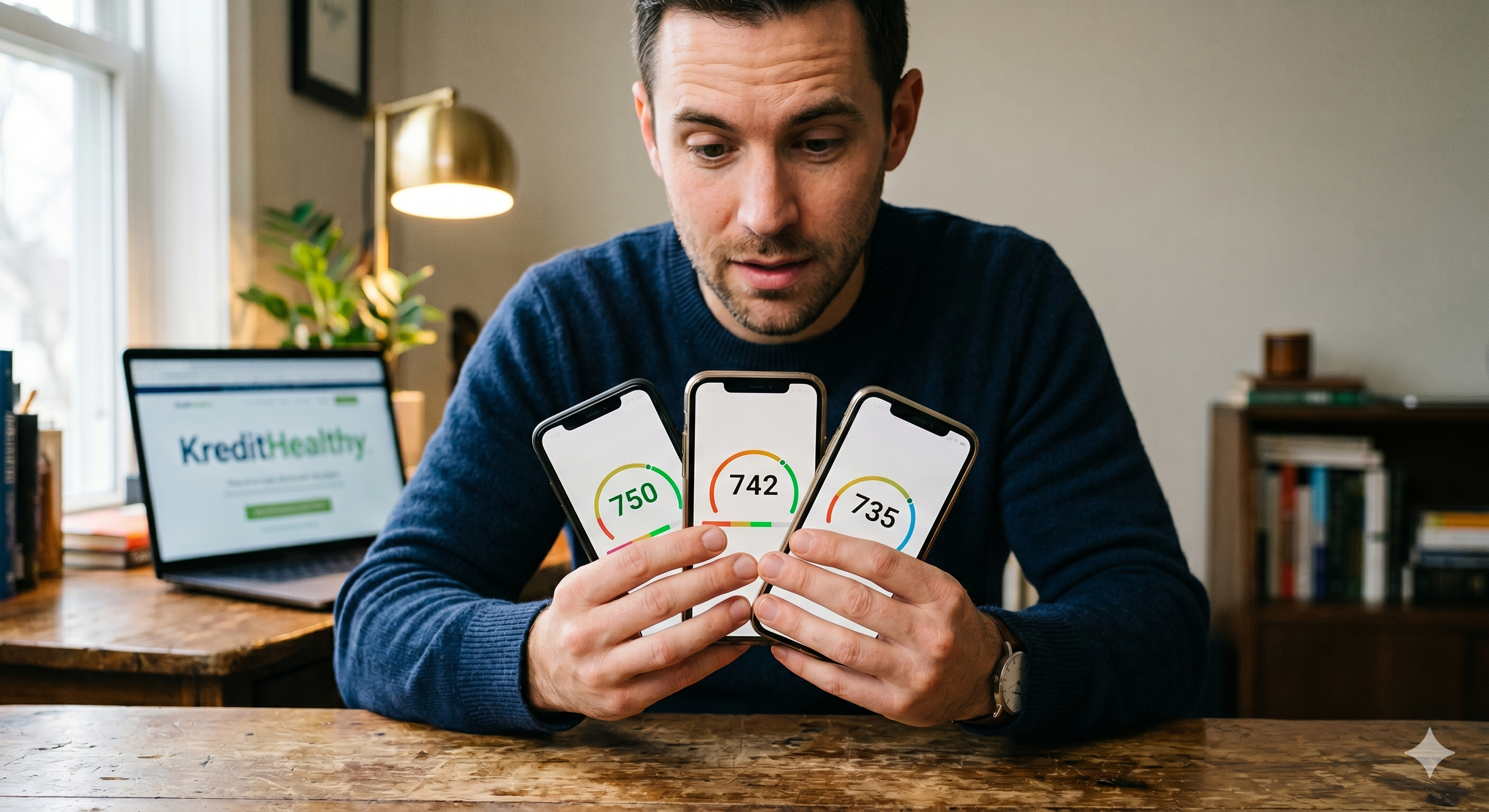
Ever wondered why Experian, Equifax, and TransUnion show different numbers? This blog breaks down the four key reasons for credit score discrepancies and explains how KreditHealthy helps you navigate the "timing gap" and different scoring models to stay financially fit.
Checking your credit score can sometimes feel like looking into three different mirrors and seeing a slightly different person in each one. If your Experian score is a 750, but TransUnion says 720, you aren't alone—and your scores aren't "wrong."
At KreditHealthy, we believe that financial literacy is the first step toward financial freedom. Here is why those numbers don't always align.
1. Variation in Data Reporting
The biggest reason for the discrepancy is the data itself. Credit bureaus are private companies, not government agencies. Lenders (banks or credit card issuers) are not legally required to report your activity to all three. Your TransUnion report might show a personal loan that Experian doesn't know about yet.
2. The "Timing" Gap
Data doesn't hit all bureaus at the same second. One bank might send its updates to Equifax on the 1st of the month but wait until the 15th to update TransUnion. If you paid off a large balance on the 5th, one score might reflect that lower utilization while the other still sees the old debt.
3. Different "Math" (Scoring Models)
Even with identical data, the calculation methods vary. Most lenders use FICO scores, while many free apps show VantageScore. Each model weighs factors like "length of credit history" or "recent inquiries" differently. It’s like two chefs using the same ingredients but following two different recipes.
4. Bureau-Specific Proprietary Algorithms
Each bureau has its own proprietary algorithm. Even when using a standard FICO model, bureaus have "fine-tuned" versions designed for their unique databases. Because their internal systems are built differently, the final output—your score—will rarely be a perfect match across the board.